Contemporary Sculpture and the Artists Now Emerging
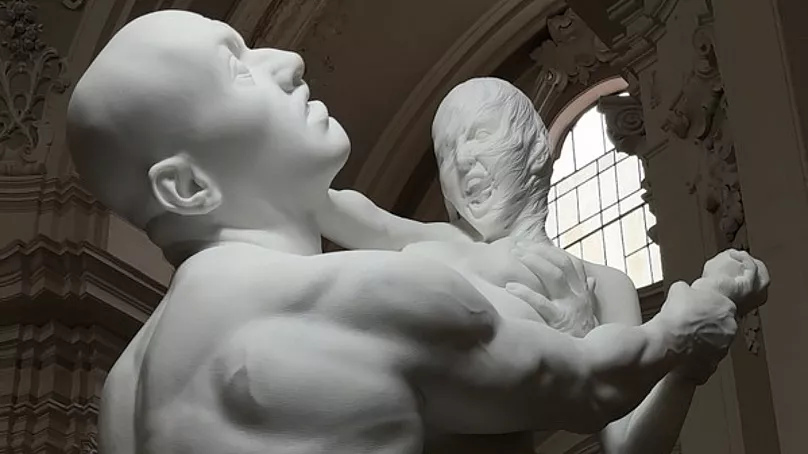
Caption: Jago, Italian sculptor.
Contemporary sculpture has moved far beyond the monument, the pedestal, and the static object. In the last two decades, sculpture has become a field of friction between craft and industry, permanence and fragility, the gallery and the street. Artists increasingly work with found matter, recycled debris, industrial composites, textiles, clay, resin, sound, and light. The result is not simply a broadened definition of form, but a renewed question: what can sculpture do in the present tense?
One major shift has been the return of material intelligence. Rather than treating material as a neutral support, many sculptors begin with the political and emotional charge of what they use. Scrap metal can carry the memory of labor. Clay can evoke touch, repair, and vulnerability. Fabric can soften monumentality and turn volume into something intimate. This attention to material has helped contemporary sculpture reconnect with lived experience.
Public space has also become central. Sculpture is no longer only installed; it is often staged as an encounter. Some works intervene in circulation, forcing the passerby to slow down or change direction. Others create temporary architectures for gathering, listening, or protest. In that sense, sculpture increasingly operates less as an isolated object and more as a social situation.
A number of emerging artists have become especially visible for the clarity of their visual language and the ambition of their formal experiments. The generation now rising tends to cross disciplines with ease: sculpture spills into installation, performance, video, and architectural thinking. Their works often resist the polished neutrality of the white cube and instead foreground instability, asymmetry, roughness, and process.
What distinguishes these younger sculptors is not a single school or style but a shared refusal of certainty. Their objects are often provisional, even when monumental. They ask viewers to think about ecology, extraction, migration, memory, and the afterlife of things. A sculpture may look abstract at first glance, then reveal itself as built from discarded domestic materials or references to damaged infrastructures.
Contemporary sculpture today is strongest when it avoids mere spectacle. Its most memorable works do not simply occupy space; they reorganize it. They change scale, pressure perception, and make us newly aware of our own bodies among other bodies and objects. That is why the field remains so alive: sculpture still has the power to slow vision down and to make thought physical.
For collectors, curators, and readers following the current scene, the most interesting names are often not yet fully canonized. They are appearing in smaller institutions, project spaces, biennials, and cross-disciplinary programs. Their emergence suggests that the future of sculpture will be less about permanence than about relation: relation between materials, histories, sites, and viewers.
In that future, sculpture will remain one of the most flexible and demanding artistic forms. It can absorb the pressures of the present while insisting on duration, weight, tactility, and presence. At a moment saturated with screens, that insistence matters more than ever.